Things to Do in Gangtok (2026 Guide)
2026-10-23
|
|
Admin
|
|
The best things to do in Gangtok are an evening walk on MG Marg, the Gangtok Ropeway, sunrise at Tashi Viewpoint, the Rumtek and Enchey monasteries, and the Namgyal Institute of Tibetology. Most people also take a day trip to Tsomgo Lake, Baba Mandir and Nathula Pass, which needs a permit through a registered travel agent. Plan 3 days for the town plus one day trip.
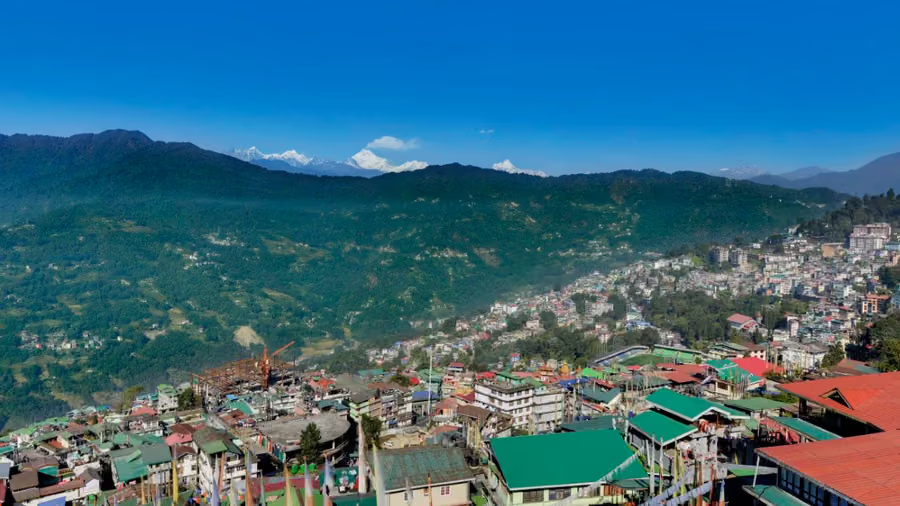 Explore the best things to do in Gangtok, Sikkim.
Gangtok is Sikkim's capital, at about 1,650 m (5,410 ft) in the Eastern Himalayas. It is clean, walkable at its centre, and has clear Kanchenjunga views on good mornings. Most attractions in town sit within 2–10 km of MG Marg, so you can see a lot in a short stay.
We run three hotels in Gangtok and our team lives here. This guide covers what is worth your time, how long each place takes, what it costs, and the permit rules that catch first-time visitors out. Prices and timings were checked in October 2026; they change, so confirm at the counter before you go.
In this guide: a quick-reference table, 12 things to do in town, 7 day trips, food and shopping, the best things to do each season, 1–3 day itineraries, and where to stay.
12 Things To Do in Gangtok Sikkim
1. Walk MG Marg in the evening
MG Marg is Gangtok's main boulevard: about a kilometre of pedestrian-only street lined with cafes, bakeries, souvenir shops and benches. Vehicles, smoking and littering are banned, which is why it feels so calm. Come after 6 PM, when the lights come on and families come out to stroll.
Tip: On weekends and festival evenings there is often live music near the central fountain.
*Planning to explore MG Marg, Gangtok's popular shopping and
dining street? Consider staying at
Yashshree Sikkim Blossom, located around 600 metres from MG Marg
.
Its location makes it a convenient option for travellers who want
to explore the cafés, shops and evening atmosphere around the city centre.
2. Ride the Gangtok Ropeway
The cable car runs from Deorali to Tashiling, with a stop at Namnang. The one-way ride is short, but on a clear morning you see the whole city spread across the ridge, with the snow peaks behind it. Tickets are around ₹170 per adult [verify current fare]. It runs roughly 9:30 AM to 4:30 PM and stops in bad weather.
Tip: Go at opening time. By late morning in peak season the queue can take an hour.
If your Gangtok itinerary includes the Ropeway, Namgyal Institute
of Tibetology and Do Drul Chorten, consider
staying at Sumitel Shangrila Deorali
.
Located in Deorali, the hotel offers a convenient base for exploring
attractions in this part of Gangtok.
3. See the Namgyal Institute of Tibetology
Built in 1958, this museum and research centre holds one of the largest collections of Tibetan manuscripts, thangka paintings and Buddhist artefacts outside Tibet. It sits in Deorali, a short walk from the ropeway base. Entry is ₹10 and it is open 10 AM to 4 PM.
4. Circle the Do Drul Chorten
This large white stupa, built in 1945, is ringed by 108 prayer wheels. Walk around it clockwise, turning each wheel, as local Buddhists do. It is a two-minute walk from the Tibetology institute, so visit both together.
5. Visit Enchey Monastery
Enchey is a 200-year-old monastery of the Nyingma order on a quiet hilltop above town. It is small, peaceful and free to enter (9 AM–5 PM). In December or January, depending on the Tibetan calendar, monks perform the masked Chaam dance here.
6. Watch sunrise at Tashi Viewpoint
On a clear morning this is the best place near town to see Kanchenjunga and Siniolchu turn pink at dawn. Arrive by 6 AM in autumn and winter. There are tea stalls at the top.
7. Climb to Ganesh Tok
A small hilltop temple at about 6,500 ft, reached by a short flight of steps. It gives wide views over Gangtok and is usually combined with Tashi Viewpoint and the zoo, which are on the same road.
8. Spot red pandas at the Himalayan Zoological Park
This zoo is set in a large forested area, with animals in big natural enclosures. Look for the red panda (Sikkim's state animal), snow leopard and Himalayan black bear. Entry is ₹25 for Indians. The district administration lists 8 AM–3 PM; check whether it is closed on your day.
9. Pray at Hanuman Tok
This Hanuman temple is maintained by the Indian Army and is spotless. On clear days it has one of the best Kanchenjunga views close to Gangtok. Go early, before clouds build up.
10. Relax at Banjhakri Falls & Energy Park
The park is built around a waterfall and themed on Sikkim's shamanic Banjhakri tradition. It is an easy, family-friendly stop with walking paths and a small lake. Entry is ₹50. See our guide to family-friendly activities in Gangtok for more ideas with kids.
11. Walk the Ridge Park and White Hall
The Ridge is a flat, tree-lined walk 15 minutes up from MG Marg. It passes White Hall, a colonial-era building, and the Flower Exhibition Centre, which shows orchids and seasonal flowers. Spring (March–May) is the best time.
12. Go paragliding
Tandem flights launch from Baliman Dara (about 1,400 m) for a 5–10 minute "medium" flight, or from Bulbuley Dara (about 2,200 m) for a 20–30 minute "high" flight. Most operators accept passengers between 30 and 85 kg. The best months are March–June and September–November. Prices vary by flight length [verify current rates with operators].
13. Tsomgo (Changu) Lake
A glacial lake at about 3,750 m, around 38 km from Gangtok (roughly 2 hours by road). It freezes from about December to February and is ringed by rhododendrons in April–May. Indian nationals need a Protected Area Permit, arranged through an agent with your photo ID. Foreign nationals have stricter rules [verify current rules for foreigners].
Cost: a shared seat is about ₹800–1,000 per person, including the permit and Baba Mandir. A private vehicle is about ₹6,500–8,000.
14. Baba Harbhajan Singh Mandir
A shrine to an Indian Army soldier, beyond Tsomgo at about 4,000 m. Soldiers and visitors believe he still guards the border. It is included in almost every Tsomgo trip.
15. Nathula Pass
Nathula is the India–China border pass at 4,310 m (14,140 ft), about 54 km and 2.5 hours from Gangtok. Here is what to know:
Who can go: Indian citizens only.
Permit: apply through a registered travel agent, usually the day before. Daily permits are capped, so they sell out in October–November and April–May.
Cost: about ₹4,000–5,000 per vehicle for the permit and handling, plus vehicle hire.
Open days: the pass closes on some weekdays and in heavy snow [verify current open days with your agent].
Timing: leave Gangtok by 7 AM, visit Nathula first, then stop at Baba Mandir and Tsomgo on the way back.
Altitude tip: you climb more than 2,600 m in a few hours. Take it slowly, drink water, and avoid the trip on your first day in Sikkim. Families with very young children or anyone with heart or lung conditions should check with a doctor first.
16. Rumtek Monastery
Rumtek, about 24 km from Gangtok, is the seat of the Karma Kagyu lineage of Tibetan Buddhism and the largest monastery near the city. See the main prayer hall, the Golden Stupa and the monastic college. Carry ID, as there is a security check at the gate. Entry is ₹10–20.
17. Ranka (Lingdum) Monastery
A newer monastery about 20 km from town, with a large courtyard and forest around it. It is quieter than Rumtek, and if you arrive early you may hear the young monks at morning prayers. Many visitors combine Ranka and Rumtek in one half-day.
18. Seven Sisters Waterfall
A tall, multi-tiered waterfall about 32 km away on the road to North Sikkim. It is a 30-minute stop rather than a trip of its own, best from July to October when the water is high. You will pass it if you continue to Lachung for Yumthang Valley.
19. Namchi: Char Dham and Samdruptse
Namchi, in South Sikkim, is about 78 km (around 3 hours) away. Char Dham is a hilltop pilgrimage complex with replicas of India's four holy shrines and a huge Shiva statue. Samdruptse has a giant statue of Guru Padmasambhava, about 45 m tall. It is a long but rewarding full-day trip.
Going further? Many travellers spend 2–3 nights in North Sikkim after Gangtok. We have three hotels in Lachung and one in Lachen for Yumthang Valley and Gurudongmar Lake.
Food, shopping and evenings in Gangtok
20. Eat momos and thukpa
Momos (steamed dumplings) and thukpa (noodle soup) are everyday food in Gangtok. You will find them in small eateries in and around MG Marg, at almost every budget. Try pork or chhurpi-cheese momos with the fiery local chutney.
21. Try a Sikkimese meal
Look beyond momos for local dishes:
Phagshapa: pork strips stewed with radish and dried chillies.
Gundruk soup: made from fermented leafy greens.
Sel roti: a sweet, ring-shaped rice bread, popular at festivals.
Chhurpi: hard yak or cow cheese, chewed as a snack.
Ask for a Sikkimese thali where it is offered. Our in-house restaurant, Blue Charcoal, also serves local dishes alongside multi-cuisine menus [confirm which hotels have it].
22. Explore Lal Bazaar
Lal Bazaar, a short walk below MG Marg, is Gangtok's main local market. Come here for spices, dried yak cheese, local pickles, prayer flags and everyday Sikkimese life. It is busiest in the morning.
23. Shop for handicrafts
For carpets, thangka paintings, wooden masks and hand-woven textiles, visit the Directorate of Handicrafts & Handloom showroom or the craft shops on MG Marg. Buying from the government emporium helps local artisans [verify the emporium's opening days].
24. Buy Temi tea
Temi is Sikkim's only tea estate, in South Sikkim. Its organic tea is sold in shops on MG Marg and makes an easy gift to carry home.
25. Spend an evening cafe-hopping
Gangtok has a lively cafe and bakery scene around MG Marg and Tibet Road. Many places have live music on weekend evenings. Most shops close by 8–9 PM, so start early.
Good to know: Sikkim has strict rules on plastic and littering. Carry a cloth bag and a refillable bottle, and never smoke on MG Marg.
Best Things to Do in Gangtok by Season
| Season |
Weather |
Best Things to Do |
Watch Out For |
| Spring (Mar–May) |
Mild, 10–22°C |
Rhododendrons at Tsomgo, flower shows at Ridge Park, paragliding |
Peak crowds in May; book permits early |
| Monsoon (Jun–Sep) |
Wet, frequent rain |
Waterfalls at their fullest, monasteries, cafes, lower hotel rates |
Landslides on NH10 and the Nathula road; keep a buffer day |
| Autumn (Oct–Nov) |
Clear and crisp |
Best Kanchenjunga views, sunrise at Tashi Viewpoint, Nathula |
Busiest season; book hotels and permits ahead |
| Winter (Dec–Feb) |
Cold, near 0°C at night |
Snow and the frozen lake at Tsomgo, Losoong and Losar festivals, winter carnival |
|
Festivals worth planning around (dates follow the lunar calendar, so check each year): Losar, the Tibetan New Year, in February or March; Saga Dawa in May or June; Pang Lhabsol in August or September; Dashain and Diwali in October or November; and Losoong, the Sikkimese New Year, in December.
Basic Gangtok Itineraries You Can Make:
Gangtok 1 Day Package:
- Morning: Ropeway, Namgyal Institute of Tibetology and Do Drul Chorten (all in Deorali).
- Afternoon: Enchey Monastery, Ganesh Tok and the zoo.
- Evening: MG Marg walk and dinner.
Gangtok 2 Day Package:
- Day 1: the 1-day plan above.
- Day 2: Tsomgo Lake and Baba Mandir (add Nathula if your permit allows). Back by late afternoon, then rest; you will feel the altitude.
Gangtok 3 Day Package:
- Day 1: Tashi Viewpoint at sunrise, Hanuman Tok, Banjhakri Falls, then MG Marg in the evening.
- Day 2: Tsomgo Lake, Baba Mandir and Nathula.
- Day 3: Rumtek and Ranka monasteries in the morning, then Lal Bazaar, handicrafts shopping and paragliding in the afternoon.
4 days or more: add a day trip to Namchi, or continue to North Sikkim for 2–3 nights in Lachung and Lachen.
Practical Tips Before You Visit
Getting to Gangtok
| From |
Distance (approx.) |
Time |
Cost (approx.) |
| Bagdogra Airport |
125 km |
4–5 hrs |
Shared taxi ₹400–600 per seat; private car ₹3,500–5,500 |
| NJP Railway Station |
120 km |
4–5 hrs |
Private taxi ₹3,500–4,000 |
| Siliguri SNT stand |
115 km |
4–5 hrs |
Shared taxi ₹400–600; SNT bus ₹300–400 |
| Pakyong Airport |
30 km |
1 hr |
Flights have run on and off; check before booking [verify] |
In the monsoon, landslides can close NH10 for hours. Keep a spare day at the end of your trip.
Permits
- Indian citizens don't need a permit to visit Gangtok. You do need one for Tsomgo Lake, Nathula and North Sikkim, arranged through a registered agent.
- Foreign nationals need an Inner Line Permit to enter Sikkim, available at the Rangpo check-post or in advance. Protected areas have extra rules, and Nathula is closed to foreigners [verify the current process on the official Sikkim Tourism website].
- Carry photo ID and two passport photos on day trips.
Getting around
Gangtok's centre is walkable, but the city sits on steep slopes, so you will use taxis for most sights. Local taxis run fixed sightseeing packages; agree the stops and the fare before you set off. Shared taxis are cheaper for routes within town.
Where to stay in Gangtok
Stay near MG Marg if you want to walk to restaurants and the evening promenade. Stay in Deorali for the ropeway, the Tibetology institute and a quieter base. Our guides compare the options:
Our own Gangtok hotels are
Yashshree Sikkim Blossom
(upscale, about 600 m from MG Marg),
Sumitel Gangtok
(mid-range) and
Sumitel Shangrila Deorali
(quiet, near the ropeway). Each hotel's travel desk can arrange Tsomgo and Nathula permits.
Frequently asked questions
What are the top 5 things to do in Gangtok?
Walk MG Marg in the evening, ride the Gangtok Ropeway, watch sunrise at Tashi Viewpoint, visit Rumtek Monastery, and take a day trip to Tsomgo Lake and Baba Mandir.
How many days are enough for Gangtok?
Three days is ideal: two days for the town and one for Tsomgo Lake, Baba Mandir and Nathula. Add 2–3 nights if you want to visit North Sikkim.
Do I need a permit for Tsomgo Lake and Nathula?
Yes. Indian citizens need a protected-area permit for both, arranged through a registered travel agent or your hotel. Nathula is open to Indian citizens only.
What is the best time to visit Gangtok?
October–November for clear mountain views, and March–May for flowers and mild weather. December–February is best if you want to see snow at Tsomgo.
Is Gangtok good for families?
Yes. MG Marg is traffic-free, and the zoo, ropeway and Banjhakri Falls are easy for children. Take care at high altitude on the Nathula trip.
What is Gangtok famous for?
MG Marg, Buddhist monasteries, views of Kanchenjunga, momos, and being the gateway to Tsomgo Lake, Nathula and North Sikkim.
Can I visit Gangtok in the monsoon?
Yes, but expect rain most days and possible landslide delays on NH10. Waterfalls are at their best and hotel rates are lower.
How far is MG Marg from Tsomgo Lake?
About 38 km, which takes around 2 hours by road.